Brighton’s new manager, Graham Potter, comes to the Premier League for the first time with an impressive track record. Full of fresh ideas and modern thinking, how is Potter starting a revolution with the Seagulls?
Brighton and Hove Albion came perilously close to relegation last season, in a campaign which saw the Seagulls, led by Chris Hughton, only securing survival by two points. It was Albion’s second season in the Premier League, and having only finished 15th and 17th after a net spend of £130 million in those two seasons, the Seagulls’ board sacked Hughton as they felt like Brighton hadn’t progressed to the level that they would’ve liked. Most sides in Brighton’s position would opt for a foreign manager to provide continental thinking, or an experienced domestic manager to provide stability in this situation, but the chairman, Tony Bloom, decided to hire 44-year-old Graham Potter.
Potter has taken an unorthodox route to the top of the footballing pyramid, having started his managerial career by taking two university degrees, in Social Sciences, and Leadership and Emotional Intelligence. He followed his degrees by taking the job at fourth-tier Swedish side Östersunds FK in 2010, and by 2015, Potter had achieved three promotions, and he had got Östersunds to the top tier of Swedish football for the first time in the club’s history. In 2017, Östersunds qualified for the Europa League after winning the Swedish Cup, and Potter took ÖFK to the Round of 32, where they lost to Arsenal on aggregate, but managed to beat them at the Emirates 2-1. His great success at Östersunds FK led to Potter becoming the manager of Swansea City, where he spent one season, leading the Swans to 10th, before getting the Brighton and Hove Albion job.
Style of Play and Coaching
During his spells at Ostersunds and Swansea, Potter was renowned for his eye-catching, progressive football, which bases itself on possession and passing out from the back. Potter always wanted his players, including the goalkeeper and defenders, to be comfortable enough with the ball to be able pick out passes even when under pressure. As a result, in the 18/19 Championship season, Potter’s Swansea City averaged the highest number of passes per match, at 537.3, as well as the league high amount of successful short passes per match (420.7) and a league low amount of unsuccessful long passes per match (27), further indicating Potter’s preference of playing possession-based football. Swansea City also boasted the greatest pass success (84%), and the second greatest possession (56%) in the league.
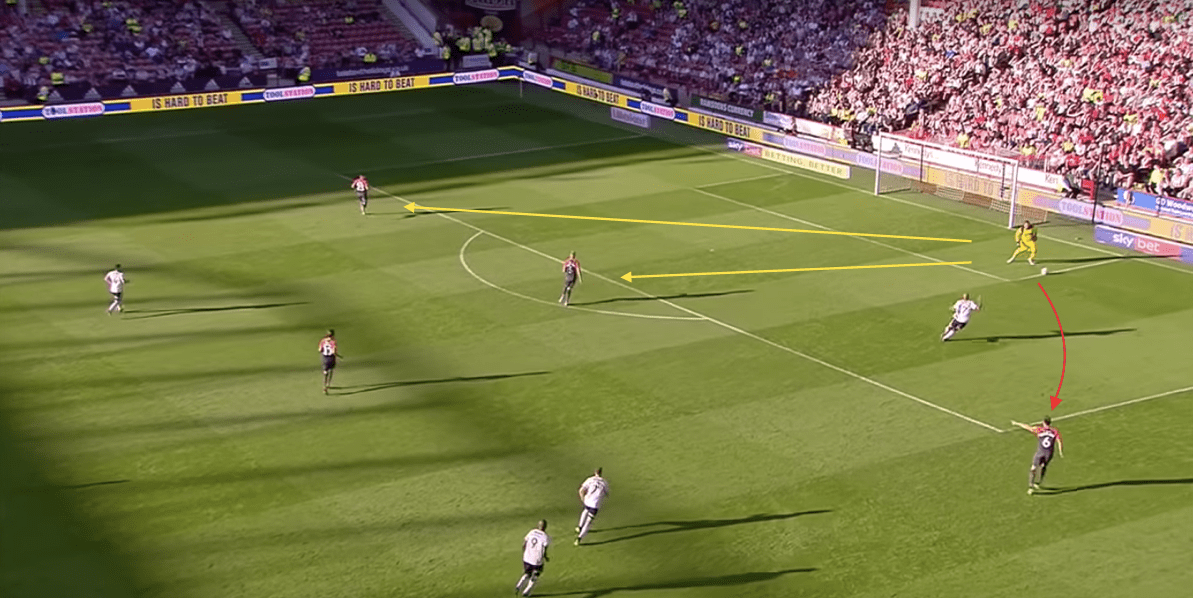
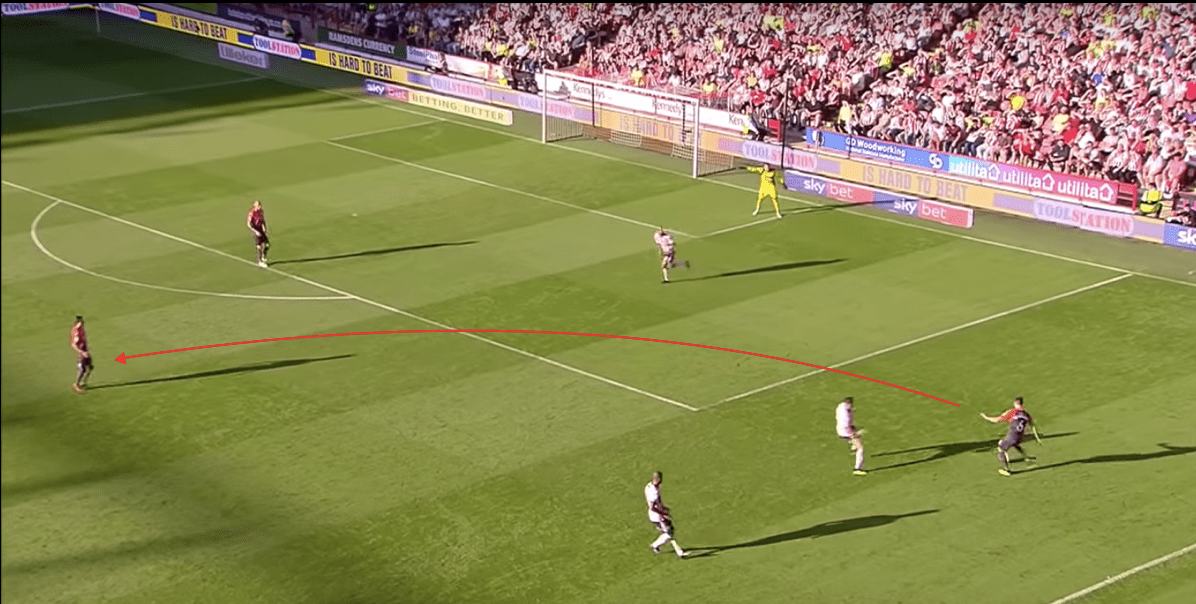
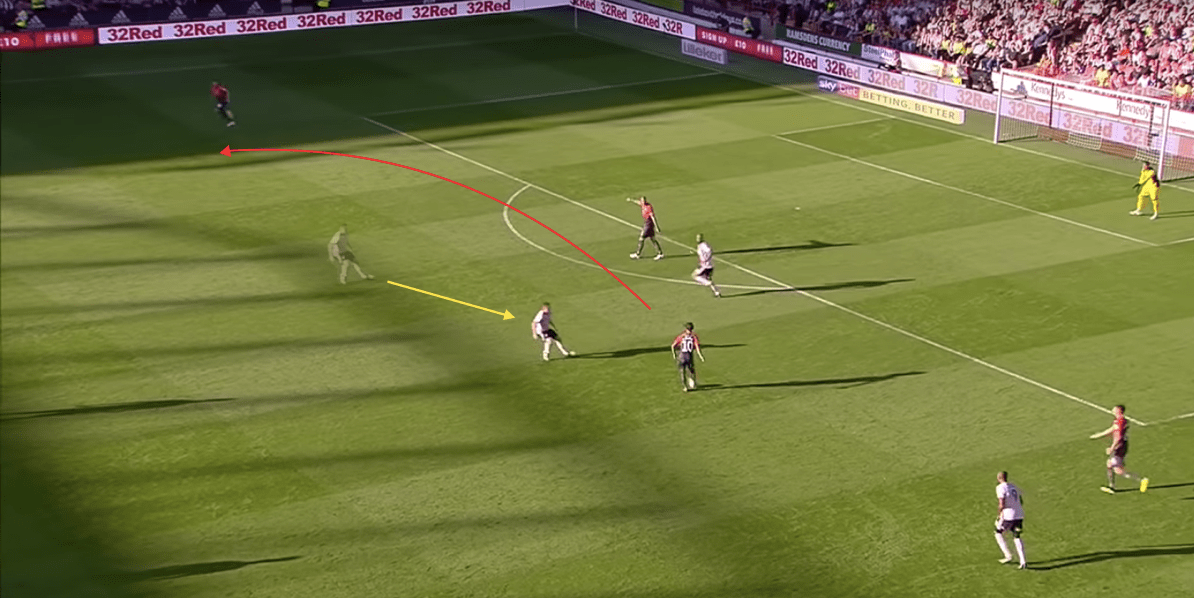
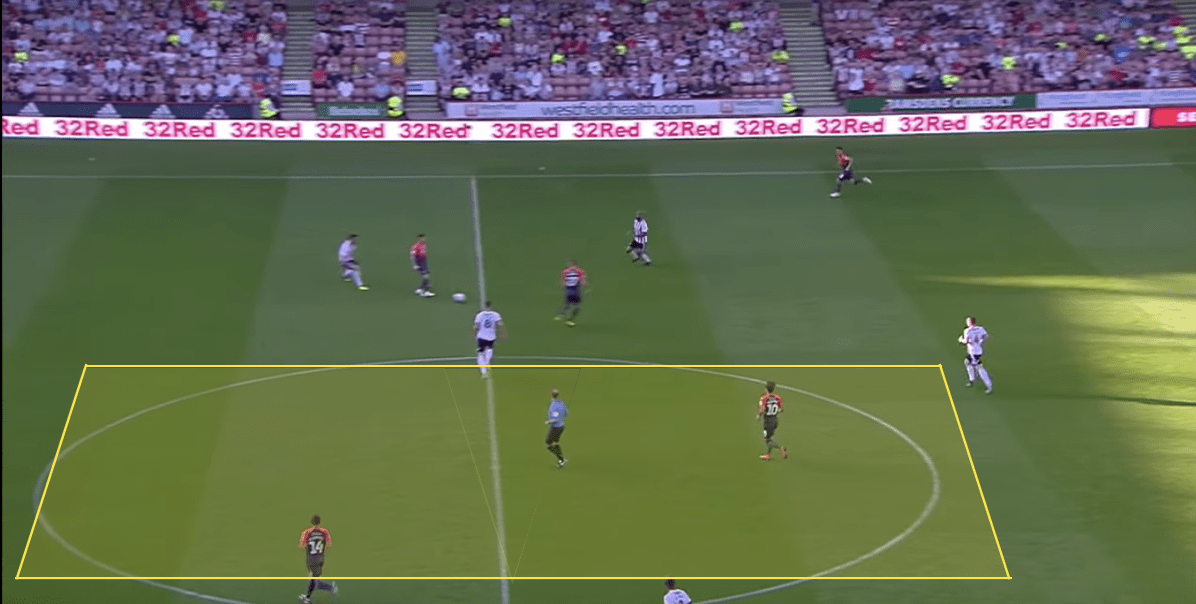
The fact that Potter’s players were encouraged to be comfortable on the ball and play out from the back meant that Swansea City often invited teams to press them when they had possession, even when deep in their own half. Opposition teams would subsequently press the ball intensely, but more often than not, Swansea would find an out-ball in midfield, beating the opposition’s press, and giving Swansea more space and time to build an attack, having taken the opposition’s first line of defence out of the game.
An example of this was during Potter’s first competitive match as Swansea City manager, a 2-1 victory against Sheffield United.
However, the fact that Potter encourages his players to be bold in possession means that they do expose themselves to the risk of giving the ball away in dangerous positions, and therefore conceding high-quality chances high up the pitch. On a few occasions at Swansea City, this happened, and with the higher intensity of pressing in the Premier League, Potter will want to be careful that this doesn’t happen this season. Swansea also conceded a league-high amount of goals from set-pieces last season (22), meaning that this is maybe an area where Brighton will be targeted this season.
Another key feature of Potter’s football at Swansea and Östersunds was his flexibility in formations. Potter used four different systems and ten different formations in his one season at Swansea City, and regularly interchanged between them during matches. A similar ploy was used at Östersunds, where he coached his players into being comfortable in a few different formations, so that they were able to change formation with relative ease during a match, depending on the circumstances.
Graham Potter’s unorthodox route into football management has also led to him using some unorthodox methods when it comes to team-building. Potter, along with his Östersunds team, have staged rock concerts and ballet performances, danced, sang and acted in front of large crowds in an attempt to build chemistry within the team, and to help the players react better in unfamiliar and uncomfortable situations. Despite sounding far-fetched and perhaps a little over the top, it seems as if this idea has gone a long way in helping Östersunds build the togetherness required to achieve their three promotions.
How He Has Set Up at Brighton

Last year, under Chris Hughton, Brighton played in a 4-3-3 formation which had little success for large parts of the season. Potter has come in and immediately shaken things up by changing Brighton and Hove Albion to primarily using the 5-4-1 formation, which becomes 3-4-3 when the Seagulls are attacking. Although based on Potter’s past, it is expected that Potter will change formations throughout the season, the new system has yielded generally positive results so far for Brighton. The Seagulls opened the season with a resounding 3-0 victory away at Watford followed by a commendable point at home against big-spenders West Ham United. In their third game they were beaten 2-0 by Southampton, but this was largely due to the sending off of Florin Andone. The Seagulls had been dominating before the dismissal of the Romanian.
The back three, made up of accomplished pair Lewis Dunk and Shane Duffy, alongside Dan Burn, fit the system well due to all three of them being more than capable ball-playing centre halves. They are all above the height of 6’4” as well, meaning that they not only will be a threat in the opposing box, but they also might help the Seagulls with their aforementioned weakness of defending set-pieces. 6’7” Dan Burn currently has the highest aerial duel success rate in the league, at 83%, and will be key in both areas for Brighton. £19 million Adam Webster is also likely to be integrated into the side throughout this season, and will help provide defensive depth for Brighton. Solly March has been utilised in an unfamiliar left-wing back position, but has used his energy and pace to get up and down that left flank effectively so far.
30-year-old Dale Stephens, despite attracting much criticism last season, has been used in midfield in the first three games, alongside Davy Pröpper. They have formed a decent partnership so far, but it wouldn’t be surprising if we saw Potter pick Yves Bissouma alongside Pröpper once the Malian returns to full fitness. Bissouma would provide a little more energy than Stephens, while still maintaining the balance and sufficient defensive compactness, and Potter will want to develop and nurture the talent that Bissouma possesses.
The centre midfielders play a key role as they will be required to help out the wide midfielders and wingbacks in the half spaces when attacking. When against a four-at-the-back formation, this can lead to 3v2 overloads in the channels, and as a result it is a key area in which teams playing 3-4-3 can profit. While one centre-mid pushes on, the other will hold a more defensive position.

The front three that Potter used in the West Ham game, and is likely to use much more this season consisted of new signing Leandro Trossard on the left, Pascal Groß on the right, and experienced goalscorer Glenn Murray leading the line. Trossard was brought in from Genk this summer having bagged 33 goals and assists in all competitions last season, but was always going to be a risk, and it is yet to be seen whether or not it will pay off. However, if his debut is anything to go by, Brighton fans will be in for an exciting time while watching the Belgian. Trossard scored Brighton’s goal against West Ham, and was their standout player on that left-hand side. His two-footedness, and direct approach made him a handful to defend against, and his long-range striking ability that he showed in Belgium was displayed by a fine right-footed effort in the second half. It’s still very early days in his Brighton career, but he could prove to be a shrewd acquisition by Potter and his scouting team.
Pascal Groß and Trossard are both good technicians, meaning that they are both able to link up with midfield and play an important part in Brighton’s possession-based game. As mentioned previously, Potter’s sides rarely like to play long balls, so it is important that the wide players are able to drop a little deeper to receive the ball to feet, before either recycling the ball to keep possession, or turning and driving the team forward. Both Trossard and Groß are more than capable at doing either.

Glenn Murray has shown that he is a consistent goalscorer in the Premier League, having scored 25 goals in the last two seasons, and provides reliability in Brighton’s attack. Despite being 35 years old, he still possesses the killer instinct to score goals at this level, although he is lacking in mobility nowadays.
One of the main signs that suggests that Potter will change formations a lot this season is the £20 million signing of Neal Maupay. The Frenchman will undoubtedly play an important role for the Seagulls this season, given his price tag and his ability. However, it is highly unlikely that he will feature as a striker in the 5-4-1 formation. He is very much an off-the-shoulder type of striker, who is always looking to get behind the opposition defence, with his pace and movement helping him greatly. These qualities, along with his finishing, helped him to score 25 league goals last year at Brentford. He was used on the right hand side against Southampton, but Potter will be keen to used Maupay in his best position, centre forward, at some point in the season, and hence it is likely that Graham Potter will change formation in order to have Maupay play up front.
To conclude, Brighton and Hove Albion have secured themselves a bright and promising manager who will bring something different to the Amex Stadium this season. Exciting new signings, Leandro Trossard and Neal Maupay in particular, will bring renewed optimism and a breath of fresh air to Brighton’s attack. Graham Potter is a manager full of fresh and modern thinking, who will play a unique, and certainly entertaining brand of football. Brighton fans have had to watch a lot of ‘ugly’ football under Chris Hughton in their two years in the Premier League, but Potter will have the Seagulls play much more attractive football, which will see Brighton have much more of the ball, and create more chances.
Brighton have had a decent start to the season and have amassed 4 points from their first three matches, but perhaps the real test of Potter’s mettle and tactical nous will arrive when Brighton come up against the big six. Potter always stuck to his guns and carried on playing a forward-thinking, progressive style of football even when playing against big teams when he was Swansea and Östersunds manager, and on some occasions it paid off, but on others, his team committed too many numbers forward and ultimately paid the price. It will certainly be interesting to see whether Potter adjusts his style during the games against the big six, and focuses a little more on grinding out a result defensively, rather than going toe-to-toe and trying to dominate possession like he normally likes to.
It’s set to be an exciting season at the Amex Stadium, and there’s no doubt that Graham Potter will play a large part in that, and has already helped breathe new life into Brighton and Hove Albion. It’s still very early days, but Graham Potter not only might be starting a revival at Brighton, but he might be taking another big step in what could turn out to be a very successful managerial career.

 betweenthelines.sport.blog